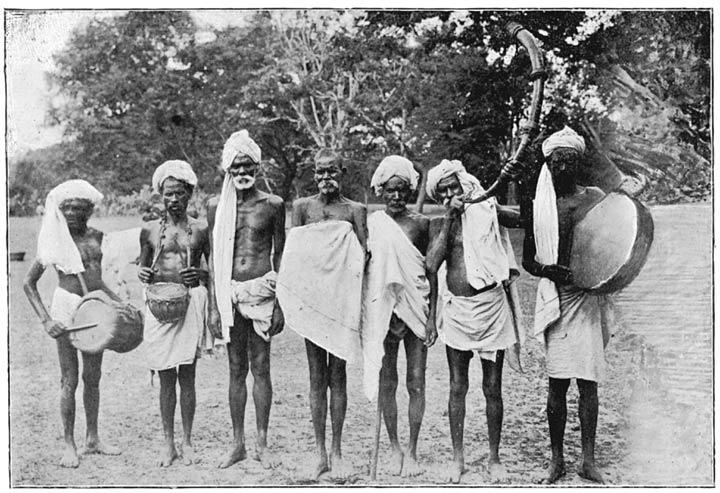
Town Criers and Drummers
"Pariah" comes from the Tamil word parai (பறை) — a large drum. The Paraiyars were the people who played it. Go back to the Sangam period (roughly 300 BCE to 300 CE) and you find them serving as town criers and ritual drummers in the Tamil lands. They announced royal decrees, marked festivals, carried news between villages. It was a public, civic role — closer to the bellmen of old England than to anything resembling an "outcast."
How the Role Became a Cage
That changed slowly, over centuries. Under the Chola and Nayak kingdoms, caste lines hardened. What had been an occupational identity — "the people who play the drum" — became a fixed social position. The Paraiyars were gradually shut out of temples, denied access to common spaces, and pushed to the edges of village life. Their labour still mattered — agriculture and temple economies depended on it — but their status didn't reflect that.
By the medieval period, the name "Paraiyar" no longer called to mind the sound of the drum. It had become a label for the social distance imposed on the community.
Then the Colonisers Arrived
When European missionaries and administrators reached South India, they found a society already divided by caste. They wrote down what they saw — or what upper-caste informants told them — and recorded the community's name as "Pariah." They didn't bother with the drum, the town-crier role, or any of the original context. They saw a group at the bottom of a hierarchy and turned their name into a label for moral inferiority. That anglicised word is what entered European languages and eventually landed in English dictionaries as a synonym for "outcast."
What the Word Actually Means
"Pariah" is not, at its root, a word about shame or exclusion. It's a word about sound — about the drum that carried announcements across Tamil villages, and the people trusted with that job. The journey from "drummer" to "outcast" doesn't tell you anything about the Paraiyar community. It tells you about the systems — caste, colonialism, careless borrowing — that took a name and twisted it into something unrecognisable.